
huaju

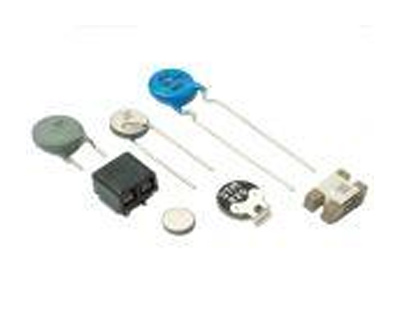

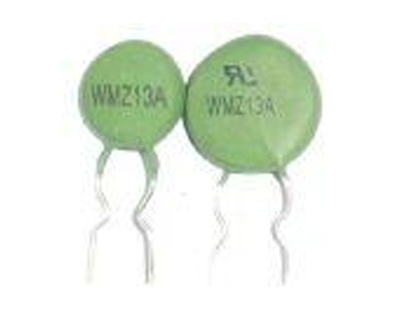
Surge suppression power type PTC thermistor for servo drive board
High-voltage and large-capacity energy storage capacitors are widely used in industrial products. Due to the characteristic that the voltage across the capacitor cannot change suddenly, at the moment the system is turned on, the current flowing into the capacitor from the grid energy often reaches a peak level of hundreds of amperes. Such a high The startup current seriously threatens the rectifier devices and overcurrent fuses in the circuit, and also brings great harmonic pollution to the public commercial power grid. Therefore, almost all circuits are equipped with a "start-up surge suppression circuit" to suppress the startup surge current to a reasonable level.
- Commodity name: Surge suppression power type PTC thermistor for servo drive board
- 产品描述
- 产品规格及参数
-
Introduction to surge suppression power type PTC thermistor for servo drive board:
1. Application scope:
High-voltage and large-capacity energy storage capacitors are widely used in industrial products. Due to the characteristic that the voltage across the capacitor cannot change suddenly, at the moment the system is turned on, the current flowing into the capacitor from the grid energy often reaches a peak level of hundreds of amperes. Such a high The startup current seriously threatens the rectifier devices and overcurrent fuses in the circuit, and also brings great harmonic pollution to the public commercial power grid. Therefore, almost all circuits are equipped with a "start-up surge suppression circuit" to suppress the startup surge current to a reasonable level.
The traditional "surge suppression component" is a common fixed resistance "cement resistor". Especially in products with power above kilowatts, high-power "cement resistors" are commonly used as surge suppression components. From the original intention of designing the power-on surge suppression circuit, the fixed resistor can meet the basic function of the design - to suppress the power-on charging current.
However, the fixed resistor itself brings new safety hazards - due to the possibility that the relay connected in parallel with the "surge suppression component" cannot be effectively closed, such as mechanical fatigue, drive failure, load failure, etc., the continuous load current flow Passing this high-resistance fixed resistor (commonly used resistance is 10~100 ohms) will inevitably produce extremely high temperatures, causing the "cement resistor" to smoke, explode and other unsafe phenomena. In extreme cases, the PCB will be melted by the high temperature. Destroy or even ignite. This is a shortcoming of linear resistors in surge suppression applications. To solve this problem, Huaju Electronics has launched a positive temperature coefficient ceramic thermistor PTC with surge suppression function. Its unique positive temperature coefficient characteristic (that is, the resistance increases as the temperature increases) can effectively suppress the continuous increase in the temperature of the device itself. The temperature change process is as follows:
PTC has low temperature and low resistance => is heated by current => temperature increases => (when exceeding the PTC thermistor operating temperature) resistance increases => current decreases => thermal power decreases => PTC resistance continues to increase ( Until tens of KΩ) => heat generation and heat dissipation are balanced => PTC temperature is maintained near the operating point (about 130~150°C).
Small and medium-power general-purpose inverters are generally voltage-type inverters that adopt an AC-DC-AC working mode. When the inverter is first powered on, because the filter capacitor on the DC side has a very large capacity, the current is equivalent to a short circuit at the moment of charging, and the current will be very large. If there is no charging resistor between the rectifier bridge and the electrolytic capacitor, it is equivalent to a direct short circuit of the 380V power supply to the ground. In an instant, the rectifier bridge will pass infinite current and cause the rectifier bridge to explode. After adding the current limit of the charging resistor, the charging resistor consumes a lot of power if there are no relays or other components. For example, for a 22kW inverter, there is at least 45A current on the PN terminal (DC bus). If there is a problem with the "connection to the control circuit" part (such as a quality problem with the relay or thyristor), the charging resistor will be broken due to excessive heat after the inverter is running for a while. Therefore, the charging resistor is connected in series in the charging circuit to limit current charging at the moment of power-on to protect some input circuit components such as the rectifier. It is also called a buffer resistor or starting resistor in some books.
Therefore, Huaju's surge suppression PTC thermistor provides help to improve the safety and reliability of switching power supplies. It is an ideal startup surge current suppression component. This product is gradually being widely used in air conditioners, industrial inverters, Provide safe and reliable power-on surge protection for power supply and other industries.

Key words:
Surge suppression power type PTC thermistor for servo drive board
Product inquiry
Note: Please leave your contact information and our professionals will contact you as soon as possible!
Address: Building 2, 126 Tianyuan Middle Road, Jiangning District, Nanjing
Tel: 025-52153215,52153380、52157721